We need your cakes for the village fête!
Please deliver them to the village hall on the morning of 30th June or liaise with Helen Griffiths on helenegriffiths@aol.com

We need your cakes for the village fête!
Please deliver them to the village hall on the morning of 30th June or liaise with Helen Griffiths on helenegriffiths@aol.com
Rumble is inspired by many other music and dance festivals, camps and gatherings sharing similar themes and creating beautiful safe spaces to explore and play.
Bringing together various different practices, combined with an appreciation of a good solid dance floor, tasty and healthy food and lots of space for random happenings and wonderings, Rumble is the place to relax, meet, experience a variety of different movement based practices and most importantly have loads of fun. 50% discount for local residents.
www.rumblefestival.co.uk

From the Community Safety Team, CDC
Property marking is one of many ways that residents can help the
police in reducing bicycle theft and ensuring your bike is locked when
leaving it and not leaving it insecure at home.
Chiltern District Council and South Bucks District Council are
encouraging residents to be more conscious of how secure their bikes
are and if they haven’t already, get them marked to reduce the risk of
theft. Whilst some bicycles are returned to their owners, most are never
seen again because they have no markings on them, or no recorded
details such as frame serial numbers and size, make, model, colour or
a picture.
Bike marking is a simple solution to this problem and means that the
police are more likely to identify the bike and return it to the owner: a
simple sticker with your postcode on, stuck to the inside of your bike
frame, will inform the police of ownership.
To support the National Bike Week Campaign, Chiltern & South Bucks Community Safety Team will be providing bicycle security marking labels to local residents. If you would like a bike label then please contact communitysafety@chiltern.gov.uk with ‘bike label’ in the subject line or call us on 01494 586535.
As well as marking your bike there are other ways of preventing and reducing the risk of bike theft:
For more information about National Bike Week visit www.bikeweek.org.uk
Follow us on twitter for community safety updates and crime prevention advice @csafetycdcsbdc
Don’t forget, GDPR comes into force on Friday this week. Sign up now to continue (or start!) receiving regular Bellingdon & Asheridge news by email.
There won’t be one in June because of the print newsletter but we’ll be starting again in July. You can find the most recent one here.
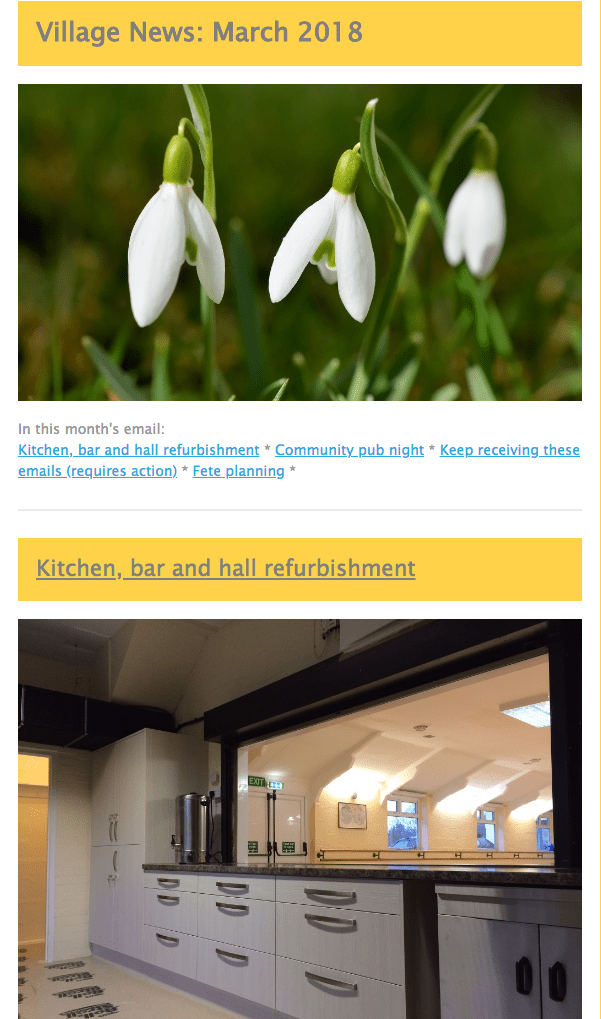
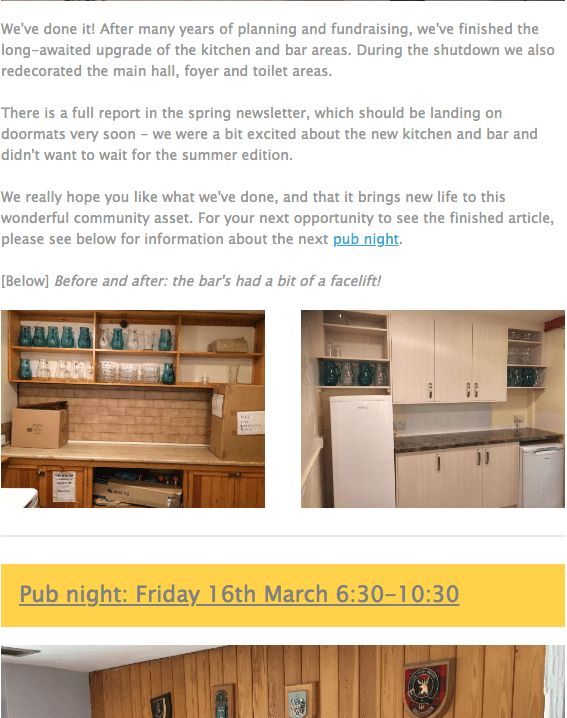
If you haven’t seen them, the emails look something like this:

Don’t forget to come to pub night tonight. All the usuals including home cooked food, drinks of all varieties, pub games and chat. Also your **exclusive** opportunity to sign up for fantastic stalls at the village fete! Don’t miss out!
And there’s the Hort Soc annual plant sale tomorrow morning too!